

Natural stone care & maintenance
Natural stone is a durable, long-lasting and naturally unique surfacing material. With appropriate cleaning, protection and maintenance suited to the specific type of stone, finish and application, natural stone can retain its appearance and performance for many years. Because natural stone varies in composition, porosity, hardness and sensitivity to acids and chemicals, always consider the specific stone and finish before using any cleaning, sealing or stain-removal product.
Care and Precautions
Use coasters under glasses, particularly those containing alcohol, citrus juices, wine or other acidic beverages. Acidic substances can etch or dull acid-sensitive stones such as marble, limestone and travertine.
Use trivets or heat-resistant mats under hot cookware and dishes. Avoid placing extremely hot items directly onto the stone surface.
Use placemats, coasters and protective pads where appropriate to help prevent scratching, staining and surface damage.
Blot spills promptly rather than wiping them across the surface.
Avoid dragging heavy, sharp or abrasive objects across the stone.
Protect stone surfaces during renovation, construction, painting or other building works.
Routine Cleaning
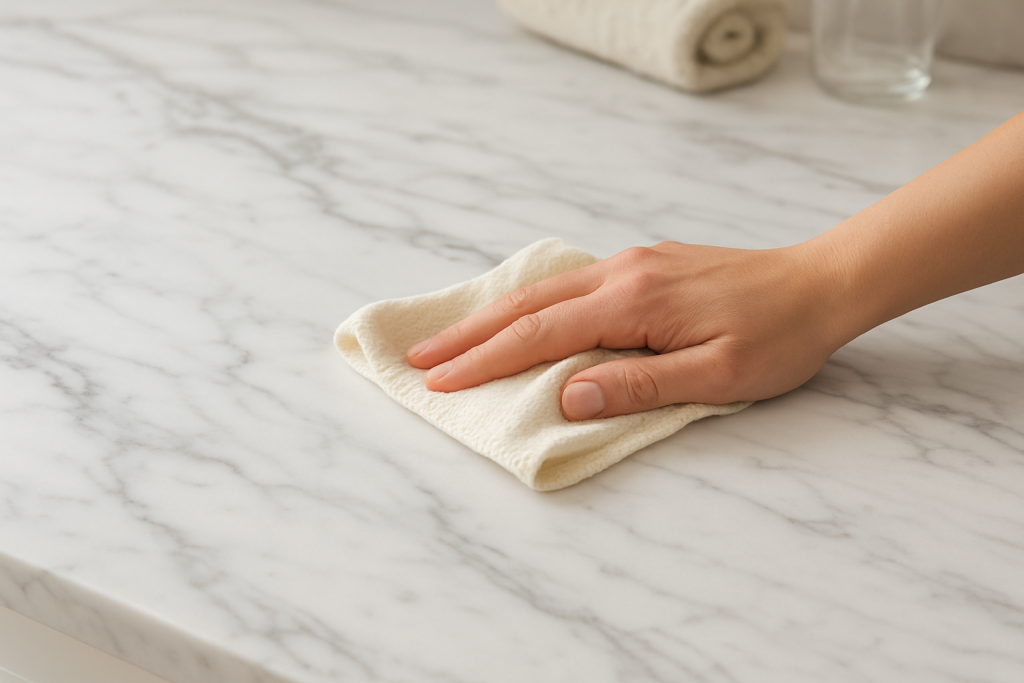
For everyday cleaning, use clean water and a soft microfiber cloth or mop. Where additional cleaning is required, use a pH-neutral cleaner specifically formulated for natural stone.
Always follow the cleaning product manufacturer’s instructions regarding dilution, application and contact time.
Avoid leaving cleaning solutions on the stone for longer than recommended. After cleaning, rinse thoroughly with clean water where appropriate and dry the surface to minimise water spotting and residue.
Do not use excessive amounts or concentrations of cleaning products. More is not better when it comes to cleaning chemicals.
Solvents and Specialised Cleaning Products
Certain solvents, including methylated spirits, may be suitable for specific cleaning applications and particular types of natural stone. However, they should not be considered a universal stone-cleaning product.
Always confirm that the product is suitable for the specific stone, finish and application before use. Test any new product on a small, inconspicuous area first.
Sealants
Depending on the type, porosity, finish and application of the stone, an appropriate penetrating sealer may be suggested to help reduce the absorption of water, oils and staining substances.
Not all natural stone requires sealing, and sealing does not prevent scratching, abrasion or acid etching.
Sealer performance and reapplication requirements vary according to the stone and level of use. Always follow the sealer manufacturer’s instructions and confirm that the product is suitable for the particular stone and application.
For food preparation areas, only use a sealer specifically approved by the manufacturer for food-contact or food-preparation applications.
When applying sealers or other chemical products, ensure adequate ventilation and follow all manufacturer’s safety instructions.
Adhesives, Grouts and Silicone
When installing natural stone, use adhesives, grouts, silicones and other installation products that are specifically recommended for the particular stone.
Some natural stones, particularly light-coloured, porous or moisture-sensitive stones, can be susceptible to staining, discolouration, warping or chemical reaction from unsuitable installation products.
Always follow the adhesive, grout and silicone manufacturer’s recommendations and confirm compatibility with the stone before installation.
Due to the characteristics of natural stone, care should be taken with some products such as juices containing acidic products, strong detergents, corrosive liquids or scouring powders which can react on the surface, leaving residues that may dull the polished/honed surface of the natural stones.
Area Care
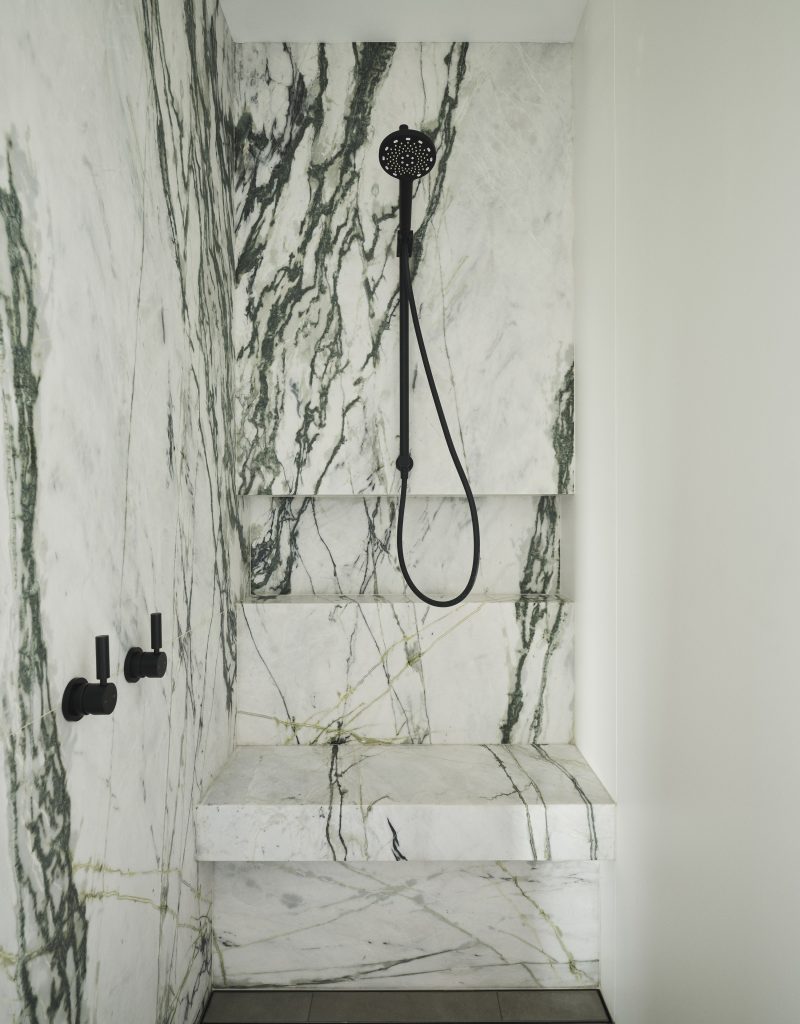
Bath and Other Wet Areas
Regularly remove standing water from stone surfaces using a soft squeegee or microfiber cloth. This can help minimise soap residue, water spotting and mineral deposits.
For routine cleaning, use a pH-neutral cleaner specifically formulated for natural stone.
Do not use acidic bathroom cleaners, vinegar, lemon-based cleaners, grout cleaners or other acidic products, particularly on marble, limestone, travertine and other acid-sensitive stones.
For persistent soap or mineral deposits, use a non-acidic product specifically formulated for natural stone and follow the manufacturer’s instructions.
Vanity Top Surfaces
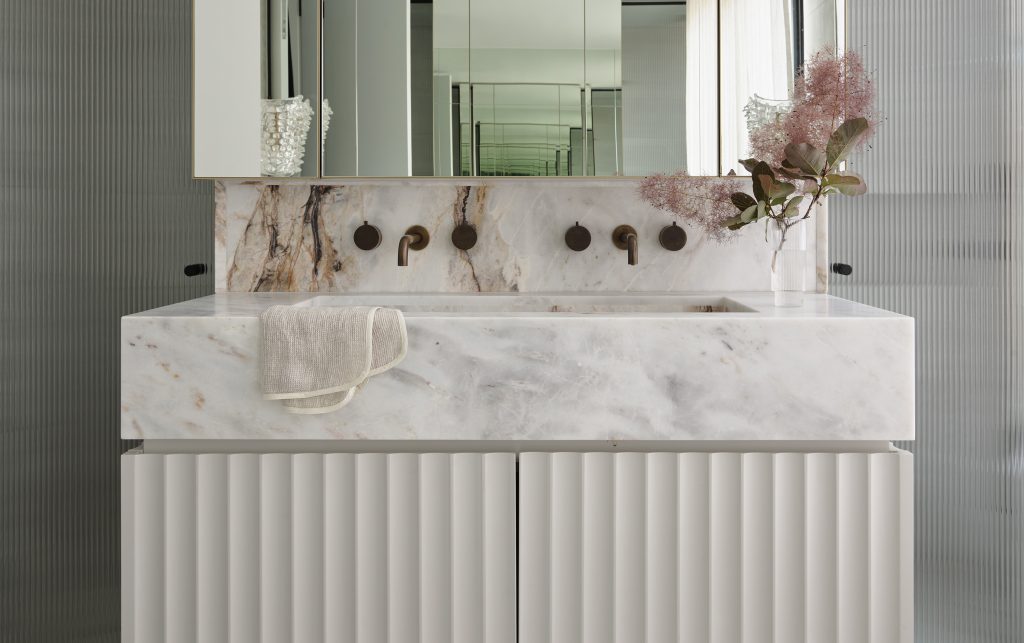
Natural stone vanity tops should be cleaned regularly with clean water or a pH-neutral stone cleaner.
Depending on the stone and application, a penetrating sealer may be recommended to help reduce absorption and staining.
Avoid leaving cosmetics, toiletries, hair products, perfumes or other potentially staining substances on the surface for prolonged periods.
Do not use waxes, polishes or products that leave a coating unless specifically recommended for the particular stone and finish.
Food Preparation Areas
Clean food preparation surfaces promptly after use using clean water and a pH-neutral cleaner suitable for natural stone.
Depending on the stone and application, a suitable penetrating sealer may be recommended to help reduce staining and absorption.
Where a sealer is used on a food preparation surface, ensure that it is specifically approved by the manufacturer for the intended application.
Always clean spills promptly, particularly oils, coffee, tea, wine, fruit juices and other potentially staining or acidic substances.
Outdoor Pool and Patio Areas
Outdoor stone surfaces should be regularly rinsed with clean water to remove dirt, dust, leaves, salts and other surface contaminants.
Around swimming pools and spas, stone may be exposed to chlorine, salt, cleaning chemicals and other substances that can affect certain stones and finishes.
For algae, moss or other biological growth, use a cleaning product specifically recommended for the particular natural stone and follow the manufacturer’s instructions.
Do not assume that bleach, chlorine or other chemicals are suitable for all natural stone. If such products are considered necessary, confirm their compatibility with the stone, finish, grout, sealants and silicones before use.
Thoroughly rinse the surface with clean water after cleaning.
Types of Stains and First Step Cleaning Actions
Different stains require different cleaning methods. The wrong chemical can permanently damage natural stone, so always identify the type of stain and confirm product compatibility before treatment.
Oil-Based Stains
Examples include cooking oils, grease, cosmetics, some food products and other oily substances.
Oil-based stains can darken the appearance of porous stone.
Remove excess material promptly and clean using a stone-safe alkaline or specialist oil-stain remover recommended for the particular stone. For persistent or deeply absorbed stains, a suitable poultice may be required.
Organic Stains
Examples include coffee, tea, fruit, wine, food, leaves, bark and other organic materials.
Remove the source of the stain promptly and clean the area using a suitable natural-stone cleaner.
For persistent organic staining, use a stone-compatible stain remover or poultice specifically recommended for the particular stone.
Metal and Rust Stains
Examples include rust, iron, copper and other metal-related staining.
Metal stains can be difficult to remove and may penetrate deeply into porous stone.
Do not use general household acids or acidic rust removers unless they are specifically confirmed as suitable for the particular stone. A stone-specific rust remover or poultice may be required.
Deep or persistent staining should be assessed by a qualified stone restoration professional.
Biological Stains
Examples include algae, mildew, lichens, moss and fungi.
Remove the source of the biological growth and clean using a product specifically formulated and approved for use on the particular natural stone.
Do not mix bleach, ammonia or other cleaning chemicals.
Always follow the manufacturer’s dilution, contact-time and safety instructions.
Ink
Examples include permanent marker, pens and other inks.
Ink can often be treated using an appropriate solvent or specialist stone stain remover. The suitability of the product depends on the type of stone and finish.
Always test the product in an inconspicuous area first.
Paint
Small amounts of paint may sometimes be carefully removed using a plastic or wooden scraper.
Do not use metal blades, aggressive abrasives or flame tools.
For persistent or extensive paint contamination, consult a qualified stone restoration professional or use a commercial product specifically approved for the particular stone.
Always follow the product manufacturer’s instructions and provide adequate ventilation where required.
Water Spots and Mineral Deposits
Water spots and mineral deposits can occur when hard water dries on the surface.
Do not use acidic limescale removers, vinegar or other acidic products on acid-sensitive natural stone.
Use a non-acidic, stone-compatible cleaner or seek professional advice where deposits are persistent.
Fire and Smoke Damage
Fireplace and smoke staining may require specialist cleaning and restoration.
Do not use aggressive chemicals or abrasive methods without first confirming their suitability for the particular stone and finish.
Significant fire, smoke or heat damage should be assessed by a qualified stone restoration professional.
Etch Marks
Etching is different from staining. Etch marks occur when an acidic substance reacts chemically with acid-sensitive stone, particularly marble, limestone, travertine and other calcium-based stones. Etching can appear as a dull, lighter or roughened area on a polished or honed surface.
Sealers do not prevent acid etching.
Do not attempt to remove significant etching using household acids, abrasive materials or unapproved polishing products.
Minor etching may sometimes be treated using a product specifically formulated for the particular stone and finish. More extensive or visible etching should be assessed and repaired by a qualified stone restoration professional.
Efflorescence
Efflorescence is a white, powdery deposit that can appear on stone surfaces, particularly in new installations. It is generally caused by moisture transporting soluble mineral salts through the substrate and depositing them as the moisture evaporates.
For new installations, carefully remove loose efflorescence using a soft dry brush, dust mop or vacuum.
Do not use acidic cleaners to remove efflorescence unless the product is specifically approved for the particular stone and application.
If efflorescence continues to return, the underlying moisture source should be investigated and addressed by the installer or an appropriately qualified professional.
Scratches, Chips and Surface Damage
The susceptibility of natural stone to scratching varies significantly according to the stone and finish.
Do not use steel wool, abrasive pads, scouring powders or other abrasive materials to remove scratches unless specifically recommended for the particular stone and finish.
Minor surface marks may sometimes be treated as part of routine stone maintenance, depending on the stone and finish.
Deeper scratches, chips, cracks, impact damage or significant surface wear should be assessed and repaired by a qualified stone restoration professional.
Do’s and Dont’s
Do’s
- DO follow the manufacturer’s instructions when using any cleaning, sealing or maintenance product.
- DO use clean water and a soft microfiber cloth or mop for routine cleaning.
- DO use a pH-neutral cleaner specifically formulated for natural stone when additional cleaning is required.
- DO test new cleaning products in a small, inconspicuous area before general use.
- DO blot spills immediately.
- DO rinse thoroughly with clean water after cleaning where appropriate.
- DO dry the surface after cleaning to minimise water spotting and residue.
- DO protect stone surfaces during renovation or construction.
- DO use coasters, placemats and trivets where appropriate.
- DO seek professional advice for persistent stains, etching, scratches, chips or other significant damage.
Dont’s
- DON’T use acidic cleaners such as bathroom cleaners, grout cleaners, toilet cleaners, vinegar, lemon-based cleaners or other products containing acids.
- DON’T use abrasive powders, scouring pads, steel wool or other abrasive cleaning materials unless specifically recommended for the particular stone and finish.
- DON’T use cleaning products containing wax, polish or other additives that may leave a residue or build up on the surface unless specifically recommended for the particular stone and finish.
- DON’T use bleach unless its suitability has been specifically confirmed for the particular stone, finish, grout, sealants and silicones.
- DON’T mix bleach and ammonia. This combination can produce toxic gases.
- DON’T mix cleaning chemicals together unless the manufacturer’s instructions specifically confirm that they are compatible.
- DON’T use excessive amounts or concentrations of cleaning agents. More is not better when it comes to cleaning chemicals.
- DON’T leave cleaning products on the stone for longer than the manufacturer’s recommended contact time.
- DON’T use razor blades, steel wool, aggressive scouring pads or other abrasive tools on the stone unless specifically recommended for the particular stone and finish.
- DON’T assume that a product suitable for one type of natural stone is suitable for another.
- DON’T use acidic products to remove stains, mineral deposits or efflorescence unless specifically approved for the particular stone.
- DON’T attempt significant repairs, polishing or restoration without first confirming the correct method for the specific stone and finish.
Important: Natural stone is a natural product and variations in colour, veining, texture, porosity and mineral composition are inherent characteristics and are not considered defects. The performance and maintenance requirements of natural stone can vary according to the stone type, finish, installation method and environment.
Always confirm the suitability of cleaning, sealing and maintenance products with the product manufacturer before use.
When in doubt, consult a qualified natural stone professional.
DISCLAIMER All material on this website is published in good faith, however Skheme Pty Ltd does not warrant or represent the origin, validity, accuracy, completeness, timeliness, authenticity or reliability of, nor accept any responsibility for errors or omissions, in any material on this website or in any accompanying or other material, including advertisements, whether oral, visual, written, printed or electronic. Skheme Pty Ltd is not liable for any losses, claims, damages, demands, costs and expenses of whatsoever nature arising in any way, including those caused by negligence, out of or in connection with the use of this website, or any accompanying or subsequent information, or by reason of any reliance upon its contents by any person, company or organisation. All access to, and use of, the information is at the user’s risk. All technical details, recommendations and other information contained on this website represent the best of our knowledge and experience at the time of publishment. It is your responsibility to ensure that our products are used and handled correctly and in accordance with any applicable Australian Standard, our instructions and recommendations and only for the uses they are intended. Country specific recommendations, depending on local standards, codes of practice, building regulations or industry guidelines, may affect specific installation recommendations. The supply of our products & services is also subject to certain terms, warranties and exclusions, which may have already been disclosed to you in prior dealings or are otherwise available to you on request. Skheme reserves the right to alter, amend, vary or otherwise change any information on this website at any time and without prior notice to you to reflect our ongoing research and development program. The provision of any URL or link is done for the convenience of users of this website. It does not constitute an endorsement by the Skheme of that URL or link or the information at that Internet site. Potential customers should speak to a Skheme consultant regarding the qualities, colours and textures of all Skheme products before purchase.