
Caring for porcelain and ceramic tiles
With the right care, porcelain and ceramic tiles can maintain their appearance and performance for many years. They are durable, low-maintenance surfacing materials, but the most suitable cleaning and maintenance routine depends on the tile finish, grout type, location and the products used.
This guide outlines suggested everyday care, periodic cleaning, stain removal and common practices to avoid.
Important: Always follow the care and maintenance recommendations provided by the tile, grout, adhesive, sealer and cleaning-product manufacturers. Different tile finishes and grout types may require different cleaning methods. When using any new cleaning product, test it first on a small, inconspicuous area.
Know Your Tile
Understanding your tile’s characteristics helps you choose the most appropriate cleaning and maintenance routine.
- Porcelain vs Ceramic — Porcelain is manufactured from refined materials and fired at higher temperatures, resulting in a dense, low-absorption body. Ceramic tiles generally have a higher water absorption than porcelain, although the exact performance depends on the product.
- Glazed vs Unglazed — Glazed tiles have a manufactured surface coating that can provide resistance to staining and simplify cleaning. Unglazed tiles have no glaze and may require additional care depending on their surface and absorption characteristics.
- Through-Body Porcelain — Through-body porcelain has a consistent or similar composition throughout the tile body. This does not necessarily mean the tile is completely stain-proof or that it requires no maintenance.
- Polished and Honed Surfaces — Polished, honed and other specialised finishes can have different cleaning and sealing requirements. Some polished or unglazed porcelain products may benefit from an impregnating sealer, but this should only be done where recommended by the tile manufacturer.
- Textured and Slip-Resistant Surfaces — Textured surfaces provide useful slip-resistance characteristics but can retain dirt in their surface profile. Regular sweeping and appropriate mechanical agitation may therefore be required.
Daily and Weekly Care
Remove Dry Debris Regularly
Dust, sand and grit can accumulate on tiled floors and act as an abrasive under foot traffic.
- Use a soft-bristle broom, microfibre dry mop or vacuum cleaner with a suitable soft floor attachment.
- Pay particular attention to entryways, edges, corners and areas beneath furniture, where dirt and grit can accumulate.
- Outdoor and high-traffic areas may require more frequent sweeping.
Regular removal of abrasive particles helps minimise surface wear and keeps tiles looking their best.
Mop Smartly
For routine cleaning:
- Use clean, warm water and, where required, a pH-neutral, non-abrasive cleaner specifically suitable for the tile and grout.
- Follow the cleaning product manufacturer’s dilution instructions. More concentrated does not necessarily mean more effective.
- Use a clean mop or microfibre cleaning pad and avoid excessively soaking the floor.
- Work in manageable sections so that dirty cleaning solution does not dry on the surface.
- Change the cleaning solution when it becomes visibly dirty.
- Rinse where recommended by the cleaning-product manufacturer, particularly if a residue is left behind.
- Allow the surface to dry naturally or dry it with a clean microfibre mop to minimise water spotting and residue.
Avoid leaving cleaning products to dry on the surface unless the product instructions specifically require this.
Respond to Spills Promptly
Although porcelain and ceramic tiles are generally highly resistant to staining, grout and some textured or unglazed surfaces can retain contaminants.
- Wipe or blot spills as soon as practical.
- Remove oils, sauces, dyes and other potentially staining substances promptly.
- Use a suitable pH-neutral tile cleaner for routine spills.
- For greasy or heavy contamination, use a purpose-made tile and grout cleaner appropriate for the specific tile and grout.
- Rinse and dry the area as recommended by the cleaning-product manufacturer.
Pro tip: Before carrying out a full clean, always test the cleaning method on a small, inconspicuous area to confirm that it is compatible with the tile finish and grout.


Periodic Deep Cleaning and Grout Care
Regular maintenance may not remove all accumulated dirt, particularly on textured surfaces, grout lines and high-traffic areas. Periodic deep cleaning can help restore the appearance of the installation.
Deep Cleaning
- Use a soft brush, microfibre pad or other non-abrasive cleaning tool to agitate accumulated dirt.
- On textured and slip-resistant tiles, work carefully into recesses and surface profiles.
- For grease, heavy soil or stubborn residues, use a purpose-made tile cleaner appropriate for the type of tile and contamination.
- Depending on the type of contamination, a suitable alkaline cleaner may be appropriate for heavy-duty cleaning. Always follow the product instructions and confirm compatibility with the tile and grout.
- Avoid using highly acidic or highly alkaline products unless they are specifically recommended for the particular tile, grout and type of contamination.
- Do not allow cleaning chemicals to dry on the surface unless specifically instructed by the manufacturer.
- Rinse thoroughly where required to remove cleaning residues.
Steam Cleaning
Steam cleaning may be suitable for some porcelain and ceramic tile installations, particularly in bathrooms and other areas where water is present. However, suitability depends on the tile, grout, sealers, joints and installation.
- Only use steam cleaning where it is recommended by the relevant manufacturers.
- Follow the steam-cleaning equipment manufacturer’s instructions.
- Take particular care around silicone joints, movement joints and other sensitive installation components.
- Do not assume that all tile, grout or sealers are suitable for steam cleaning.
Grout Care
Grout is generally more porous and susceptible to staining than the tile itself.
- Clean grout regularly using a grout-safe cleaner and a suitable soft brush or cleaning pad.
- Inspect grout periodically for cracking, gaps, erosion or other deterioration.
- Repair damaged grout promptly to help maintain the integrity of the tiled installation.
- Avoid aggressive scrubbing that can damage or remove grout.
- Cementitious grout may benefit from sealing depending on the product and installation. Inspect the sealer periodically and reapply when required, following the grout and sealer manufacturer’s recommendations.
- Epoxy grout generally does not require sealing.
- Never apply a grout sealer without first confirming that it is compatible with the specific grout and tile.
Pro tip: Rotate and regularly clean rugs and mats. They can collect grit and moisture, while prolonged placement in high-traffic areas can result in uneven soiling or wear patterns. Shake them out and clean beneath them regularly.
Sealing — When and What to Seal
Most glazed porcelain and ceramic tiles do not require sealing. Sealing requirements depend on the tile surface, grout type and manufacturer’s recommendations.
- Glazed porcelain and ceramic tiles generally do not require a sealer on the tile surface.
- Unglazed or textured tiles may benefit from an appropriate impregnating sealer in some applications, depending on their absorption and surface characteristics.
- Polished porcelain may have microscopic surface pores created or exposed during the polishing process. Some products may therefore benefit from an impregnating sealer or stain-resistance treatment.
- Always use a sealer specifically rated as suitable for the tile, grout and intended application.
- Before sealing, ensure the surface is clean, dry and fully cured where applicable.
- Apply the product strictly according to the manufacturer’s instructions, including coverage, dwell time, removal of excess product, curing and reapplication requirements.
- Ensure adequate ventilation when using sealers and cleaning chemicals.
Important: Sealing does not make a tile or grout completely stain-proof or eliminate the need for regular cleaning.
Care by Area
Different environments expose tiles and grout to different types of contamination.
Bathrooms and Wet Areas
- Remove soap residue and surface water regularly.
- Squeegee shower walls and glass after use to reduce water spots and soap-scum buildup.
- Use a suitable non-abrasive, non-acidic cleaner for routine cleaning.
- For stubborn soap scum, use a product specifically designed for the tile and grout.
- Maintain good ventilation to help reduce condensation and moisture accumulation.
- Inspect grout, silicone joints and movement joints regularly for deterioration.
- Repair damaged grout and joints promptly.
Kitchens and Splashbacks
- Wipe spills promptly, particularly oils, sauces, dyes and other staining substances.
- Use suitable trivets or heat-resistant mats where required rather than placing extremely hot cookware directly against sensitive surfaces.
- Do not drag heavy cookware, appliances or other objects across the tile surface.
- Use chopping boards rather than cutting directly on tiled surfaces.
- Avoid abrasive cleaning products and tools that may scratch or alter the surface finish.
- Clean grease and cooking residues regularly to prevent buildup.
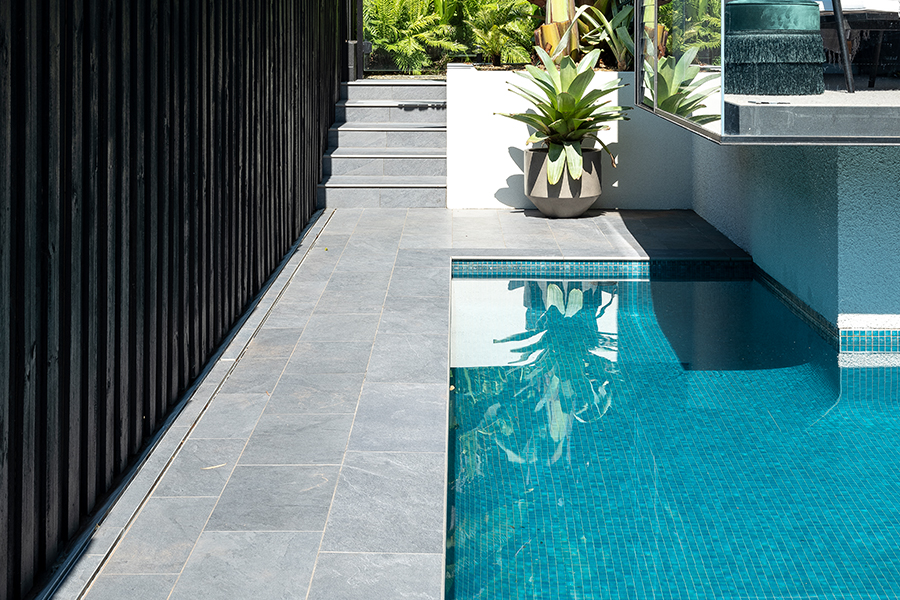
Outdoor , Patio and Pool Areas
Outdoor tiles can be exposed to dirt, leaves, organic matter, pool chemicals and weather conditions.
- Sweep regularly to remove leaves, sand, grit and other abrasive debris.
- Rinse surfaces as appropriate to remove accumulated dirt and contaminants.
- Remove organic growth such as algae, moss and mould using a cleaner specifically suitable for the tile and surrounding materials.
- Oxygen-based or other purpose-made outdoor tile cleaners may be suitable for some organic staining; always follow the product manufacturer’s recommendations.
- Avoid allowing unsuitable chemicals to enter garden beds, waterways or other sensitive areas.
- In areas where de-icing salts are used, follow the tile, grout and cleaning-product manufacturer’s recommendations, as salts can affect grout and surrounding materials.
- Pressure washing should be used with caution. Excessive pressure or directing the jet too closely at the surface can damage grout, joints or tile edges. Follow the pressure-washer manufacturer’s recommendations and keep the nozzle at a safe distance.
- Check drainage regularly and prevent prolonged standing water where possible.

Things to Avoid — Why
Good tile maintenance also means avoiding practices that can damage the tile, grout or installation.
- Dragging heavy objects — lift objects where possible or use appropriate protective pads. Sliding heavy items can damage tiles, grout or joints.
- Acidic cleaners used without checking compatibility — acids can damage certain tile finishes, grout, sealers and adjacent materials. Never assume an acidic product is suitable simply because it is marketed as a bathroom or tile cleaner.
- Harsh or unsuitable alkaline cleaners — highly concentrated or unsuitable products can damage or discolour some tile finishes, grout, sealers or joints.
- Abrasive tools and pads — steel wool, metal brushes and aggressive scouring pads can scratch or alter the appearance of some tile finishes.
- Wax and polish products — these can leave a surface residue, attract dirt and potentially alter slip characteristics. Do not use them unless specifically recommended for the tile.
- Unapproved sealers or coatings — unsuitable products can leave residue, change the appearance of the tile or make future cleaning more difficult.
- Excessive standing water — avoid prolonged water accumulation and ensure wet areas have suitable drainage and ventilation.
- Mixing cleaning chemicals — never mix cleaning products unless the manufacturer specifically states that they are compatible.
- Bleach and ammonia — never mix bleach with ammonia, as dangerous toxic gases can be produced.
- Cutting directly on tiles — use a chopping board to protect both the tile surface and your cutting tools.
- Aggressive pressure washing — excessive pressure can damage grout, joints, tile edges and other installation components.
Common Problems and Solutions
| Problem | Likely Cause | Recommended Approach |
| Persistent haze or film | Cleaning residue, unsuitable products, wax or excess sealer | Re-clean with a suitable tile cleaner. If the residue persists, use a product specifically designed to remove the particular residue, following the manufacturer’s instructions. |
| Mottled colour or patchy areas | Uneven cleaning, dirty rinse water | Re-clean systematically using clean solution and clean water. Avoid allowing cleaning products to dry on the surface. |
| Efflorescence — white powder or deposits | Moisture movement carrying soluble salts through grout or the substrate | Remove deposits using an appropriate method for the tile and grout, then investigate and address the underlying moisture source where necessary. |
| Stained grout lines | Absorption of spills, dirt accumulation or inadequate cleaning | Use a grout-safe cleaner and suitable brush. If staining remains, professional grout restoration or replacement may be required. |
| Algae, mould or moss outdoors | Moisture, shade, organic contamination or poor drainage | Use a suitable outdoor tile cleaner and address drainage, moisture and environmental conditions contributing to the growth. |
| Scratches or dull spots | Abrasive contamination, impact, dragging objects or inappropriate cleaning methods | Do not attempt aggressive polishing without confirming that the process is suitable for the particular tile finish. Seek professional advice for significant or permanent damage. |
| Water spots or mineral deposits | Hard water or mineral residue | Use a cleaning product specifically suitable for the tile and deposit. Acidic products should only be used where confirmed compatible with the tile, grout and surrounding materials. |
Pro tip: Light-coloured grout can show dirt and staining more readily than darker grout. Regular cleaning helps maintain its appearance. Where appropriate, a manufacturer-approved grout colourant or restoration product may be used to refresh permanently discoloured grout.
Long-Term Care and Inspection
A simple inspection routine can help identify small problems before they become larger maintenance issues.
- Carry out a deep clean and grout inspection at least annually, or more frequently in high-traffic or heavily used areas.
- Inspect grout lines, silicone joints and movement joints periodically for cracks, gaps, deterioration or separation.
- Address damaged grout and joints promptly.
- Check areas exposed to regular moisture for signs of persistent water accumulation or drainage problems.
- For textured and high slip-resistance surfaces, pay particular attention to dirt buildup within the surface profile.
- Inspect sealed grout and sealed tile surfaces periodically and reapply sealer only when required and in accordance with the manufacturer’s recommendations.
- Keep spare tiles from the original installation where possible. Matching a discontinued tile several years later can be difficult.
- Keep records of the tile, grout, sealer and cleaning products used so that future maintenance can be carried out using compatible products.
Why Proper Care Matters
Regular, appropriate maintenance helps protect both the appearance and performance of your tiled installation. Appearance — routine cleaning helps preserve the colour, finish and overall appearance of the tiles.
Performance — removing dirt, oils and residues helps maintain the intended characteristics of the tile surface.
Grout and joints — inspecting and maintaining grout and joints helps protect the integrity of the installation.
Safety — removing dirt, grease and cleaning residues helps maintain the intended surface characteristics, particularly in wet and outdoor areas.
Longevity — appropriate cleaning and prompt maintenance can help extend the service life of the tiled installation and reduce the need for costly restoration or replacement.
Final Reminder
Porcelain and ceramic tiles are designed to be durable and relatively easy to maintain, but there is no single cleaning method suitable for every tile, finish or grout system.
Always identify the tile and grout type before selecting a cleaning product or maintenance treatment. Use products as directed, avoid unnecessary chemicals and abrasives, and follow the recommendations of the relevant manufacturers.
When in doubt, test first, use the least aggressive effective cleaning method, and seek professional advice for persistent staining, damage or restoration requirements.
DISCLAIMER All material on this website is published in good faith, however Skheme Pty Ltd does not warrant or represent the origin, validity, accuracy, completeness, timeliness, authenticity or reliability of, nor accept any responsibility for errors or omissions, in any material on this website or in any accompanying or other material, including advertisements, whether oral, visual, written, printed or electronic. Skheme Pty Ltd is not liable for any losses, claims, damages, demands, costs and expenses of whatsoever nature arising in any way, including those caused by negligence, out of or in connection with the use of this website, or any accompanying or subsequent information, or by reason of any reliance upon its contents by any person, company or organisation. All access to, and use of, the information is at the user’s risk. All technical details, recommendations and other information contained on this website represent the best of our knowledge and experience at the time of publishment. It is your responsibility to ensure that our products are used and handled correctly and in accordance with any applicable Australian Standard, our instructions and recommendations and only for the uses they are intended. Country specific recommendations, depending on local standards, codes of practice, building regulations or industry guidelines, may affect specific installation recommendations. The supply of our products & services is also subject to certain terms, warranties and exclusions, which may have already been disclosed to you in prior dealings or are otherwise available to you on request. Skheme reserves the right to alter, amend, vary or otherwise change any information on this website at any time and without prior notice to you to reflect our ongoing research and development program. The provision of any URL or link is done for the convenience of users of this website. It does not constitute an endorsement by the Skheme of that URL or link or the information at that Internet site. Potential customers should speak to a Skheme consultant regarding the qualities, colours and textures of all Skheme products before purchase.